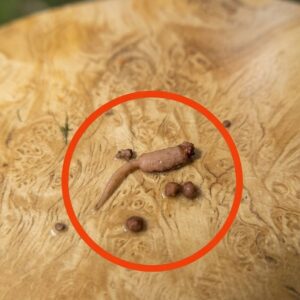
After a few seconds I forced myself to look closer. The object was not moving. It had no segments, no defining features of a living organism—just a strange, rubbery shape that had twisted in the heat.
Examining it further, I realized it was almost certainly connective tissue—a piece of sinew or tendon. During the grinding process these tougher parts can stretch and twist, then curl tightly when exposed to high heat. We often forget that meat is not perfectly uniform. It contains muscle, fat, and connective tissue, any of which can look unusual once cooked.
While the sight was unsettling, it was not necessarily dangerous. Knowing the difference between ordinary tissue and actual spoilage is important for avoiding unnecessary panic. In the end I chose not to serve the meal, but I walked away with a clearer understanding: not everything strange in food is a threat. Sometimes simply recognizing what we are seeing is enough to turn fear into calm.