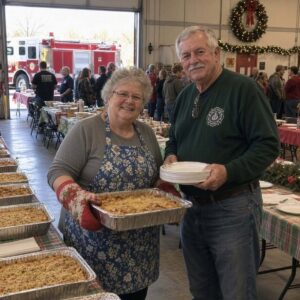
Inside the box lay a heavy bronze medal on a red ribbon, the Medal of Service, which had never been given to anyone who did not fight fires. The chief explained that the department had voted for it unanimously two months earlier. The empty chair beside the podium was Harold’s, and the white place card on it read “Guest of Honor.” The new coordinator had been hired only a week ago, and she had checked the firefighter roster alone, never the special list the chief sent to the office. She stood in the doorway with tears running down her face.
The chief turned to the crowd and told them a story. Twenty-nine years ago, on a stormy night, he rode in Engine Nine as a rookie. That afternoon, Harold had refused to approve the truck because he found a hairline crack in a brake line that no inspection had caught. His supervisor told him to let it go. Harold stayed past midnight, replaced the line by hand, and wrote it in his notebook. Hours later, the engine raced down a mountain road with six firefighters aboard, and the brakes held.
Dad said nothing for a long moment. Then he opened his notebook to a page gone soft with age, and there it was, the same date and a single line in pencil: replaced rear brake line, Engine Nine. “I was only doing my job,” he whispered. The chief shook his head. “Six of us went home to our families because you never treated your job as small.” The firefighters formed two lines from the pickup to the doors, and the room rose to its feet as Dad walked between them.
The chief pinned the medal to his shirt, and Dad sat in the front chair for the first time in thirty-nine years. The coordinator found him and apologized. Dad only told her to learn the names of the people who keep the trucks running. A month later, a photo of Dad and his dented toolbox was hung beside the fire chiefs, and the coordinator started a mechanics award.